AMD vs Intel: Why AMD Wins for Mini PCs in 2026

The Short Answer
For a full-sized desktop with a dedicated graphics card, the AMD vs Intel debate is genuinely close. But for a mini PC, AMD wins — and it is not even close. Three factors decide it: integrated graphics, power efficiency, and multi-core performance. AMD leads in all three, and that combination is exactly what a compact, thermally-constrained, battery-friendly computer needs.
Why the Integrated GPU Decides Everything
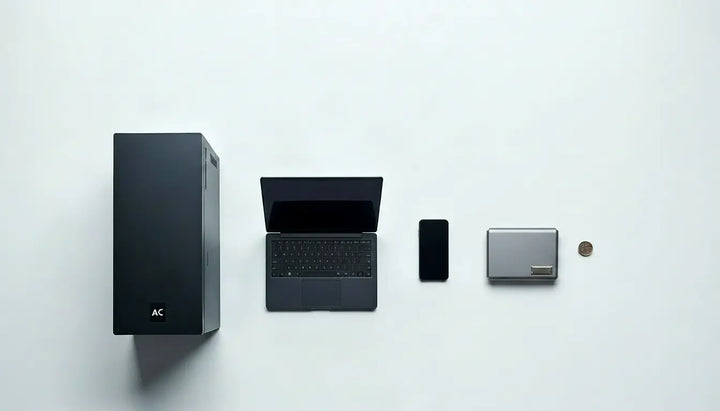
A mini PC is a computer in a box the size of a book. There is no slot for a graphics card. The only graphics you get are whatever is baked into the processor. That makes the integrated GPU the single most important spec for a mini PC.
|
Factor |
AMD (Ryzen) |
Intel (Core) |
|
Integrated graphics |
Radeon 780M — near entry-level GPU |
Intel Arc/UHD — behind |
|
1080p gaming |
Smooth medium-high |
Struggles on many titles |
|
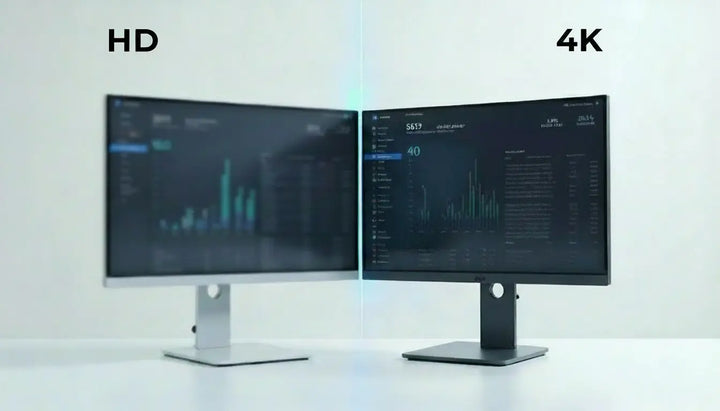
Multiple 4K displays |
Handles easily |
Supported, less headroom |
|
Power efficiency |
Lower draw, cooler |
Higher draw, more heat |
|
AI / NPU |
Ryzen AI NPU on select chips |
Intel AI Boost on newer |
Gaming on a Mini PC — AMD's Radeon Edge
The most visible consequence of the iGPU gap is gaming. A mini PC cannot play demanding AAA titles at 4K — neither AMD nor Intel — but at 1080p, the difference is dramatic.
|
Game |
AMD (Radeon 780M) |
Intel iGPU |
|
Fortnite |
60+ FPS medium |
Low settings only |
|
GTA 5 |
Smooth at medium |
Borderline |
|
Valorant / CS2 |
High frame rates |
Lower, less stable |
|
Minecraft |
Excellent, shaders |
Fine, basic |
|
Cyberpunk 2077 |
Playable with FSR |
Not recommended |
|
Workload |
AMD |
Intel |
Why |
|
Video editing & export |
Stronger |
Good |
Multi-core rendering and export are faster |
|
Photo editing |
Good |
Good |
Close; AMD iGPU gives a slight edge |
|
3D modeling & rendering |
Stronger |
Good |
Rendering is heavily multi-threaded |
|
Audio production |
Good |
Good |
Both fine; AMD multi-core helps on large sessions |
|
Software dev & VMs |
Stronger |
Good |
Compiling and virtual machines love cores |
|
AI & local compute |
NPU built-in |
Partial |
Ryzen AI NPU runs models on-device |
Gaming is the most visible difference, but it is not the only one. For professionals, AMD's multi-core strength and NPU make a measurable difference across these workloads:
Beyond Gaming — AMD's Other Mini PC Advantages
Price and Value
Mini PCs already carry a "small form factor premium." Within that premium, AMD delivers more per dollar because you are not paying extra for a weak iGPU.
|
Mini PC Price |
AMD |
Intel |
|
Budget ($200-400) |
Strong iGPU even at low end |
Basic iGPU, no gaming |
|
Mid-range ($400-700) |
Ryzen 7 + 780M = 1080p gaming |
Comparable CPU, weaker graphics |
|
High-end ($700+) |
Best all-round mini PC chips |
Strong CPUs, still behind on iGPU |
When Intel Still Makes Sense
To be fair, Intel is not a bad choice in every scenario. If you never game and only need a quiet box for office work, an Intel mini PC can be fine — and sometimes cheaper.
· Pure office work, web, and email: a tie — pick by price. Both brands are more than capable.
· Thunderbolt / eGPU expansion: Intel, thanks to native Thunderbolt support.
· 1080p gaming on a mini PC: AMD, thanks to the stronger Radeon iGPU.
· Portable or battery-powered PCs: AMD, for efficiency and graphics.
The Foldable PC Proof — Why Starole Chose AMD
The foldable keyboard PC is the most demanding mini PC form factor: pocket-sized, battery-powered, silent, yet still capable of gaming and local AI. Every constraint points to AMD — a foldable PC cannot afford a hot, power-hungry chip, and has no room for a discrete GPU, so it needs the strongest integrated graphics in a low-power envelope.
The Starole FoldPC is the proof. It runs an AMD Ryzen 7 8840U with Radeon 780M — chosen because that chip combines all three advantages: the strongest integrated graphics in its class, the efficiency to last 8-10 hours on a 60Wh battery, and a Ryzen AI NPU for local AI. A foldable keyboard PC has no room for a discrete GPU and no tolerance for a hot, power-hungry chip — so it needs exactly what AMD offers and Intel cannot match in the same envelope. That same logic should guide your mini PC choice.
FAQ
Is AMD or Intel better for mini PCs?
AMD. Its integrated Radeon graphics are far stronger, which matters most in a mini PC with no room for a dedicated GPU.
Can an Intel mini PC game?
Light and esports titles at low settings, yes — but it cannot match AMD's 1080p performance on a Radeon 780M.
Does the CPU brand matter for office use?
No. Both are more than capable for email, documents, and browsing. Pick whichever fits your budget.